Are Climate Risk and Coastal Erosion Becoming a Major Factor in Cape Cod Home Values Heading into 2026?

Coastal erosion and rising sea levels are shaping the future of Cape Cod real estate. In Barnstable County, new FEMA flood maps and climate models are influencing buyer decisions and property values in 2025–2026.

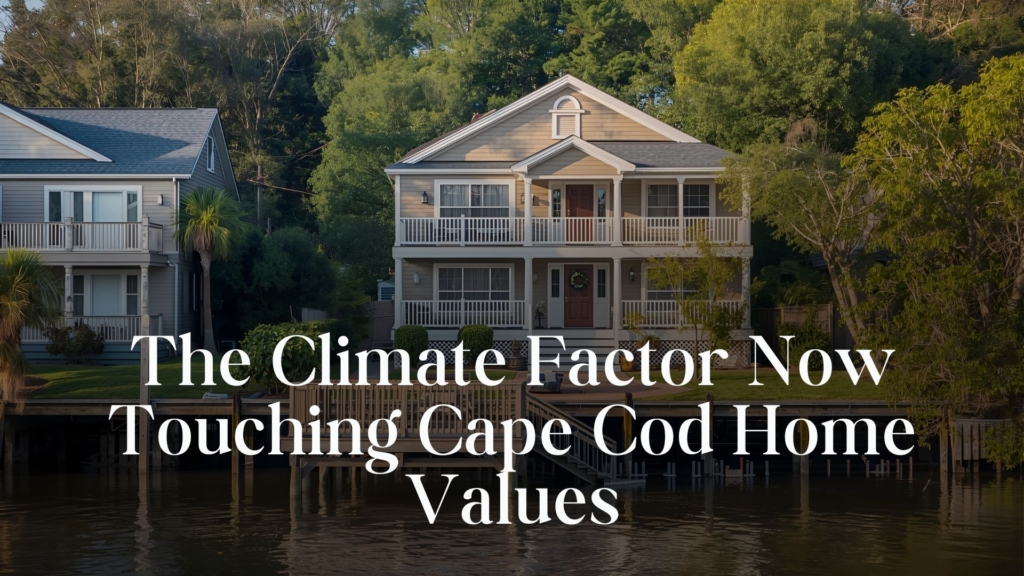
The Climate Factor Now Touching Cape Cod Home Values

For years, Cape Cod’s draw has been its oceanfront charm — but that same coastline is now at the heart of a new real estate reality.
In late 2025, climate risk is emerging as a tangible market variable. Updated FEMA flood zones, rising insurance premiums, and publicized erosion events are all reshaping buyer behavior and long-term investment confidence, especially in Barnstable County.

The Cape Cod Commission’s Sea Level Rise Viewer now allows anyone to visualize flood exposure parcel-by-parcel across towns like Barnstable, Hyannis, Chatham, and Falmouth (source).
At the same time, the Massachusetts Office of Coastal Zone Management (CZM) is mapping facilities and residential risk with updated projections through 2050 (source).

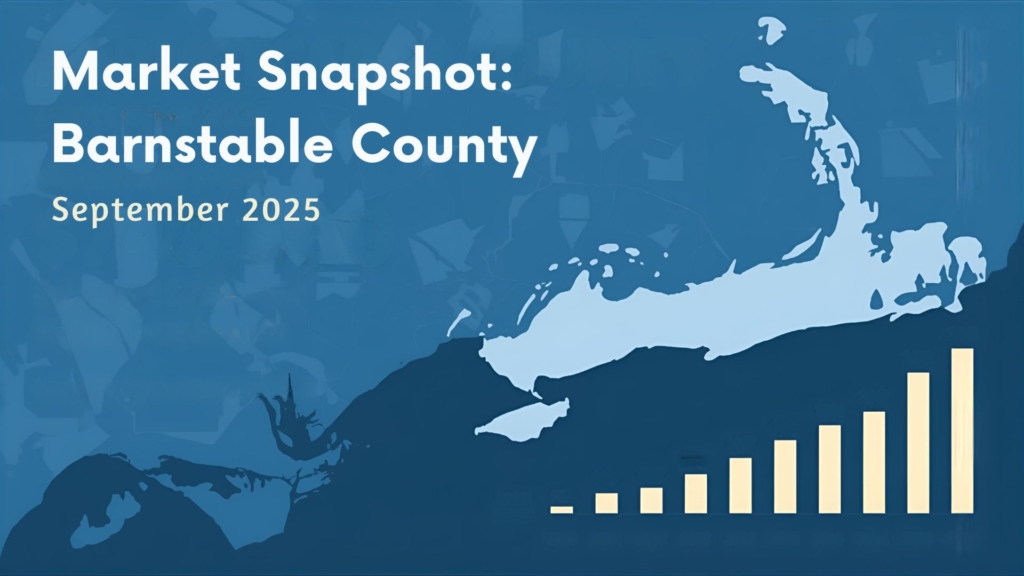
Market Snapshot: Barnstable County, September 2025

According to the Barnstable County Registry of Deeds, September 2025 saw:

  • 531 real estate deeds recorded valued at $50,000+

  • A median sale price of $700,000

  • 12.7% year-over-year increase in sales volume

  • A 46.7% total value increase, driven by one large commercial deal

(Source: Barnstable County Registry of Deeds, Oct. 3, 2025)

While overall sales and prices remain strong, Realtors and appraisers across Falmouth, Yarmouth, and Chatham report longer days on market for waterfront homes near flood-prone areas — an early indicator of market sensitivity to environmental risk.

How Flood Maps and Insurance Are Reshaping Buyer Behavior

The Cape Cod Commission’s FEMA FIRM Comparison Tool (link) and FEMA’s Flood Map Service Center (link) both highlight shifting flood zones.
Properties newly included in “AE” or “VE” zones often see:

  • Higher flood insurance costs

  • Lender scrutiny during underwriting

  • Reduced resale appeal for risk-averse buyers

For many homeowners, especially near Hyannis Harbor and Osterville, these designations now directly impact market value and carrying costs.

The Coastal Erosion Effect: More Than Just a Visual Concern

In February 2025, major news outlets covered erosion-driven demolitions in nearby Wellfleet — where luxury homes were ordered removed due to cliff collapse risk. These incidents shook local confidence and sparked regional discussion about shoreline retreat and valuation risk.

According to the Cape Cod Commission’s OneCape 2025 Climate Action & Resiliency Summit, the region’s vulnerability is not theoretical — storm surge and shoreline loss are accelerating, even as adaptation projects (dunes, living shorelines, elevated construction) expand across the Cape.

The Shift Toward Inland or Elevated Homes

Local agents are observing a “micro flight inland.”
Areas slightly removed from the coast — such as West Barnstable, Centerville, and Sandwich’s interior neighborhoods — are seeing more stable demand.
These zones offer lower insurance premiums, fewer permitting issues, and less exposure to flood-related depreciation.

Meanwhile, waterfront sellers face greater scrutiny: elevation certificates, resilience features, and flood-history disclosures are now routine buyer requests.

What This Means for Buyers, Sellers, and Investors

For Buyers:

  • Review FEMA flood maps before making an offer.

  • Ask your lender for full insurance estimates early in the process.

  • Consider inland or elevated neighborhoods for long-term stability.

For Sellers:

  • Highlight resilience upgrades (elevated foundations, bulkheads, dune restoration).

  • Price strategically if located within new or expanding flood zones.

  • Obtain flood zone verification and certificates pre-listing.

For Investors:

  • Focus on properties outside FEMA “AE/VE” zones to preserve rental ROI.

  • Evaluate cap rates inclusive of potential insurance increases.

  • Track policy and zoning updates at both the town and county level.

FAQ

Q: Will climate risk lower home values on Cape Cod?
Not uniformly — but homes in high-risk flood or erosion zones may face slower appreciation or rising costs that reduce buyer appeal.

Q: Are new FEMA flood maps already active in Barnstable?
Yes, updated maps and comparison tools are active for 2025 and used in permitting and insurance assessments.

Q: What are local governments doing to mitigate erosion?
Projects like dune restoration, seawalls, and “living shorelines” are expanding through 2026 to stabilize vulnerable stretches.

Final Thoughts

If you’re thinking about buying or selling on Cape Cod in 2026, now is the time to evaluate your property’s climate exposure.
Resilient homes are holding their value — but the data shows that environmental risk is now part of every serious real estate conversation.

Contact Nancy Cassano— Realtor®, Barnstable County — for a personalized property analysis and neighborhood-level insights.

© 2026 All Rights Reserved.

Barnstable Lifestyle: Pros & Cons

Barnstable Lifestyle: Pros & Cons I often meet buyers who say the same thing after...
Continue reading

The Most Common Seller Regrets

The Most Common Seller Regrets I’ve sat at many kitchen tables with homeowners after their...
Continue reading

How AI Is Changing Home Buying

How AI Is Changing Home Buying A buyer said something to me recently that stuck. “I already...
Continue reading

Why Some Renovations Don’t Add Value

Why Some Renovations Don’t Add Value One of the most common conversations I have with...
Continue reading

Compare listings

Compare