Cape Cod’s real estate market has always been a magnet for investors, vacation homeowners, and seasonal visitors. But in 2025, that landscape is shifting — and fast. The ongoing debate over new short-term rental (STR) regulations in towns across the Cape, including Barnstable, Provincetown, and Orleans, could reshape how investors buy, rent, and profit from local properties.
Let’s break down what’s happening, what’s being proposed, and how it could affect your investment strategy on Cape Cod.
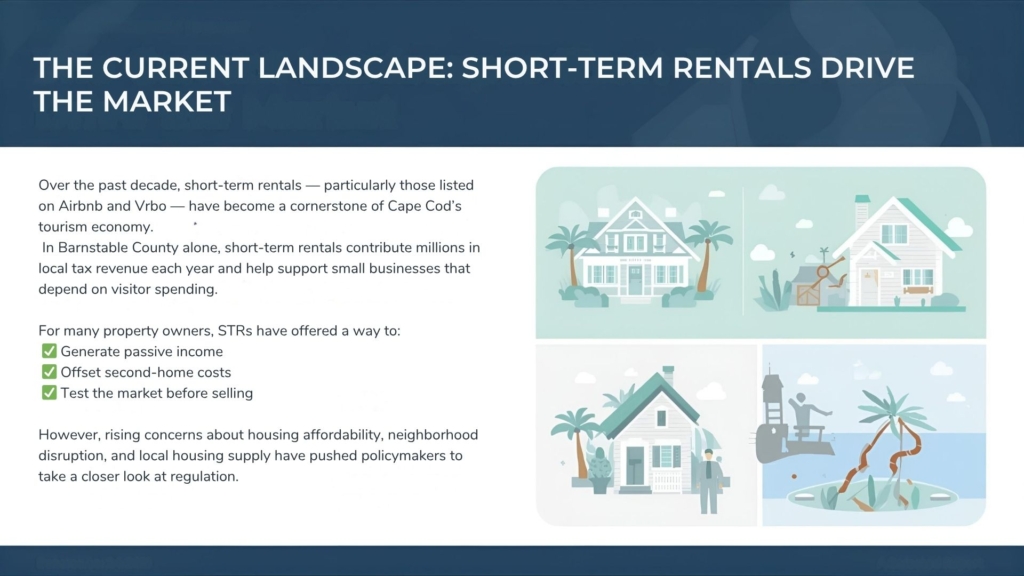
Over the past decade, short-term rentals — particularly those listed on Airbnb and Vrbo — have become a cornerstone of Cape Cod’s tourism economy.
In Barnstable County alone, short-term rentals contribute millions in local tax revenue each year and help support small businesses that depend on visitor spending.
For many property owners, STRs have offered a way to:
✅ Generate passive income
✅ Offset second-home costs
✅ Test the market before selling
However, rising concerns about housing affordability, neighborhood disruption, and local housing supply have pushed policymakers to take a closer look at regulation.
In 2025, several Cape Cod towns are reviewing or tightening their short-term rental policies. Key proposals being discussed include:
Annual rental caps — Limiting the number of days a property can be rented short-term each year
Primary residence requirements — Restricting STRs to owner-occupied homes only
Zoning adjustments — Creating designated STR zones or banning STRs in certain residential neighborhoods
Registration and compliance fees — Increasing transparency and safety requirements through town-level registries
Barnstable and Provincetown have been at the center of this discussion, each exploring how to balance tourism with long-term housing needs.
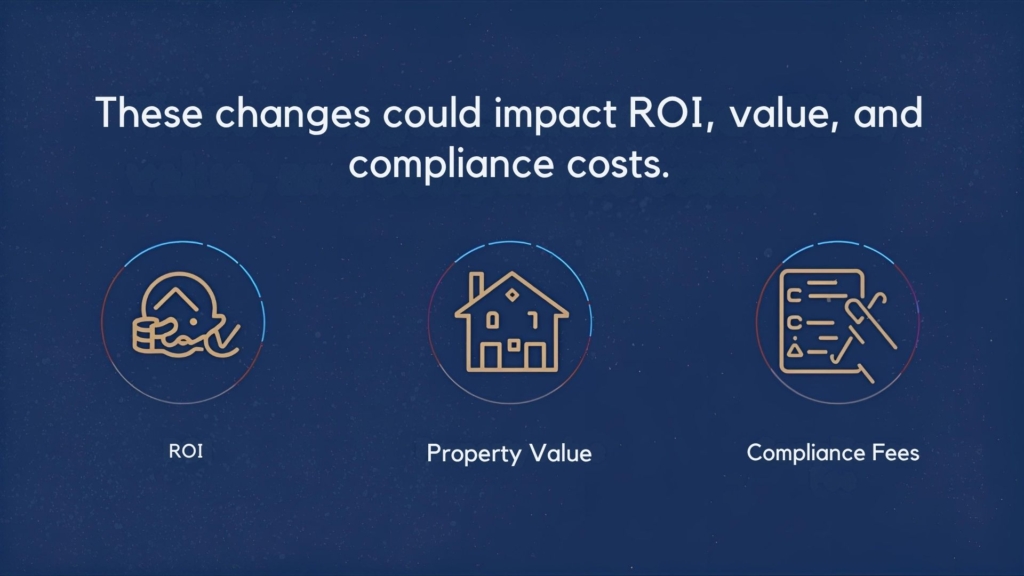
For investors, the outcome of these regulations could significantly influence profitability, property value, and rental strategy:
Caps on rental days or owner-occupancy rules could limit income potential for investors who operate multiple properties or rely on year-round bookings.
If stricter regulations pass, some investors may pivot toward long-term leasing — especially as local demand for year-round rentals remains strong.
Homes primarily valued for their short-term rental potential may see slower appreciation if the market limits STR use. However, neighborhoods with less transient activity could benefit from renewed stability.
Registration fees, local taxes, and safety inspections may add ongoing operational costs that investors need to account for in 2025 and beyond.
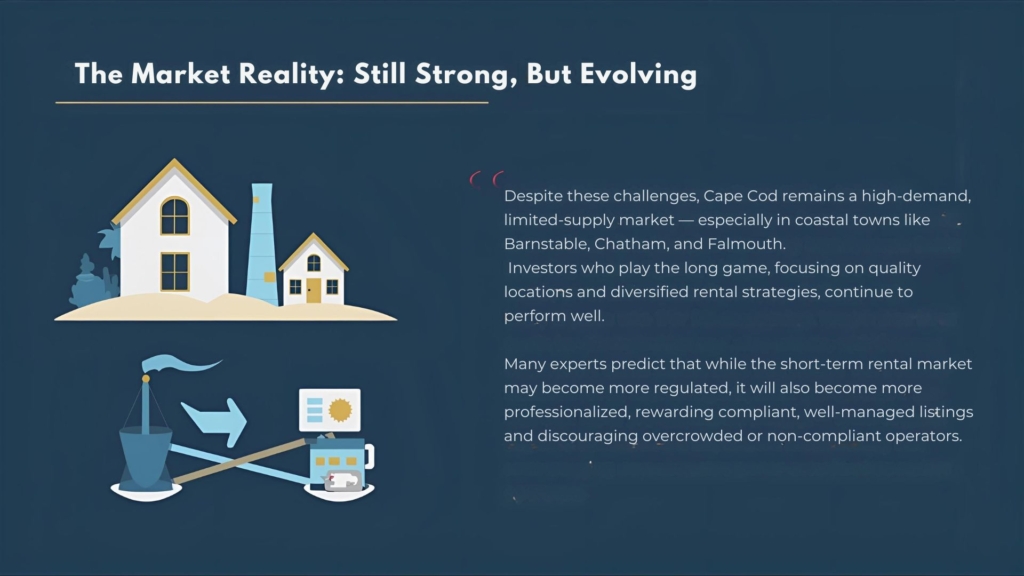
Despite these challenges, Cape Cod remains a high-demand, limited-supply market — especially in coastal towns like Barnstable, Chatham, and Falmouth.
Investors who play the long game, focusing on quality locations and diversified rental strategies, continue to perform well.
Many experts predict that while the short-term rental market may become more regulated, it will also become more professionalized, rewarding compliant, well-managed listings and discouraging overcrowded or non-compliant operators.
If you own or are considering investing in Cape Cod real estate, here are a few strategic moves to make in 2025:
Stay informed — Follow updates from your town’s planning or housing department. Regulations vary across municipalities.
Review ROI models — Recalculate returns based on potential STR limits or added fees.
Explore hybrid models — Combine short-term summer rentals with off-season long-term tenants.
Work with a local Realtor — A trusted Cape Cod Realtor can help you identify properties that align with evolving regulations and still offer strong returns.
Cape Cod’s short-term rental debate reflects a broader trend across the country — balancing housing needs with tourism-driven economies.
For investors, 2025 is a year to adapt, not retreat. Those who stay ahead of policy changes and invest strategically in compliance and location will continue to thrive in the Cape’s evolving market.
© 2026 All Rights Reserved.
Compare listings
ComparePlease enter your username or email address. You will receive a link to create a new password via email.